Monday, 19 March 2018

Passion Sunday: Show me things I've never seen before


First preached as sermon at Guildford Cathedral on the Fifth Sunday of Lent, Passion Sunday, 2018.
Gospel reading: John 12.20-33

‘Sir, we wish to see Jesus’ (John 12.21).

'What do you see?'
Many people are familiar with a trip to the optician. Famously on the wall there are letters of ever decreasing sizes to test your sight. But we know that sight does not always equate to vision and seeing things on a deep level.

Seeing, recognising and believing are constant themes throughout St John’s gospel.

The climax of the Prologue to St John’s Gospel, speaks of the Word being made flesh, Jesus Christ, who dwelt among us ‘and we have seen his glory’. John continues ‘No one has ever seen God. It is God the only Son, who is close to the Father who has made him known’. (John 1.14, 18).

John also deals in signs, visual pointers to the profound truth of Jesus Christ’s mission and purpose. Famously he records seven signs – a perfect number – and says there were many more: water changed into wine (John 2.1-11) showing the coming hour of transformation in Jesus Christ; the healings of the royal official's son in Capernaum (John 4:46-54) and the paralysed man at Bethesda (John 5:1-15); the multiplication of loaves and fishes to feed the five thousand (John 6:5-14); Jesus walking on water (John 6:16-24); and the raising of Lazarus (John 11:1-45). All signs to be seen to point to Jesus’ divine power. They ask us, ‘now do you see?’

The remaining sign is of the man born blind whose sight is restored such that he can see who Jesus really is (John 9:1-7). The story culminates in Jesus speaking to the man whose sight has been restored saying,

‘Do you believe in the Son of Man? He answered, ‘And who is he, sir? Tell me, so that I may believe in him.’ Jesus said to him, ‘You have seen him, and the one speaking with you is he.’ He said, ‘Lord, I believe.’ And he worshipped him. (cf John 9.35b-41)

Seeing in John’s Gospel is far more than a visual reception of data and a function of the retina; this seeing is seeing with the eye of the heart. What I coin deep-sightedness.

It is this sort of seeing that Mary Magdalene has when at first she fails to recognise Jesus through her tears on the Day of Resurrection but on hearing Christ speaks her name she sees, as says ‘Rabbouni, teacher’ (John 20.1-18). And Mary Magdalene the first missionary, the Apostle to the Apostles, proclaimed, ‘I have seen the Lord’ (John 20.18).

The apostle Thomas sees with his eyes but not with his heart, and he seeks visual evidence of Jesus’ resurrection: but then a moment of recognition comes and he says ‘My Lord and my God’ (John 20.24-29).

***

So, those Greeks appear saying to Philip, ‘Sir we would see Jesus’. Well, what have they come to see? What do we see in Jesus? What does their question demand of us if we place ourselves in the shoes of Philip the disciple when someone else says to you, ‘I want to see Jesus? There is a missional edge to their request.

Quite what the Greeks made of their seeing Jesus, history does not relate. It is in St Mark’s gospel that the centurion gazes at the Son of Man, Jesus Christ, on the cross and declares, ‘Truly this is God’s son’. Many did see and believed; many saw Jesus and saw nothing beyond.

‘Sir, we wish to see Jesus’. This notion of seeing is important. The Greeks arrive to see Jesus, and their own mother tongue, Greek, has a variety of words that mean ‘to see’.

Their request to see could be from scorpion from which we get the word ‘scope’, as in telescope and microscope. Were they scoping Jesus? Getting the measure of him? Assessing what it would mean to follow him?

‘Sir, we wish to see Jesus’. It could be, that far from be intrigued and seeing Jesus to get the measure of him, that there was a different edge. Their request ‘to see’ could be another Greek word sképtesthai from which we get the word ‘sceptic’. It was true then, as it is now, that there are sceptics about who Jesus Christ is. They may want to be entertained or to dismiss, as in Herod’s request to see Jesus (Luke 9.9). Sometimes, though, even scepticism can lead people on the journey of encounter with him; that’s true even today of people who come to see Jesus sceptically and find their lives turned around by him. When Jesus encounters two of John the Baptist’s slightly sceptical disciples he says, ‘Come and see’ (John 1.39)

‘Sir, we wish to see Jesus’. The word John’s gospel actually uses is idein which means ‘to see’, in the sense of ‘to visit’ or ‘to meet with’. But it can also mean, in the context of John’s gospel, ‘to believe in’. ‘Sir’, they could be saying to Philip, ‘we wish to believe in Jesus’.

In meeting them Jesus he doesn’t say, “well, here I am have a good look”. Rather he unveils what is hinted at in the Prologue to John – and we have seen his glory –as Jesus declares that now his hour has come. And what will be seen is his glorification, the glorification of the cross, when he is lifted up from the earth.

Window in Guildford Cathedral - South Aisle
In the wilderness the Israelites who were being infested by poisonous serpents could be cured by looking at a pole erected by Moses (it features in the window on the south side of the Cathedral nave). Therein lay their healing and restoration. The cross is the new sign to be gazed upon for salvation. That is the image Jesus is drawing upon as he speaks of the Son of Man lifted up. (cf also John 3.14-21)

This takes us to Good Friday and the Proclamation of the Cross and we hear the haunting verse of Lamentations, ‘Is it nothing to you all you who pass by. Look and see if there is any sorrow like my sorrow’ (Lamentations 1.12a). We hear that as we gaze upon the stark wood of the cross. Not just a bit of carpentry but the sign of our hope and salvation.

It is this deep-sightedness that enables St John Chrysostom to say of Jesus on the cross: ‘I see him crucified; I call him King’.

***

Today is Passion Sunday. It is the day in the Church’s year, before the intensity and drama of Holy Week, on which we begin to contemplate more intensely what we see in the glorification of Jesus Christ and ‘behold the wood of the cross, whereon was hung the Saviour of the world’, as the Good Friday liturgy puts it.

As the time of his Passion draws near may we consider how we see Jesus Christ, and behold God in all people, moments and things. Passion Sunday is a spiritual optician’s check-up (from another Greek word optikos "of or having to do with sight and seeing’).

My prayer is that believer and enquirer alike may cry out to the Lord: ‘I wish to see Jesus: show me things I’ve never seen before’. Amen.

© Andrew Bishop, 2018

Thursday, 1 March 2018

Guildford Cathedral Lent Talks - Faith through Art: Storm


Guildford Cathedral Lent Talks - Faith through Art: Storm
This talk given as part of a series on Thursday 1st March

In the name of the Father, and of the Son, and of the Holy Spirit. Amen.

The storm is a great metaphorical image. The storm represents a variety of things: amongst other things tumultuous times in our lives; the desire for serenity and peace when there is none; it represents our hope that we will come through the other side intact and not be dashed against the rocks. For Christians as much as anyone the storm is a real threat: we know that the death of a loved one; a dreadful medical diagnosis; unforeseen financial loss; or loss of mental faculties all create storm conditions in our lives. Metaphorically Churchill spoke of the Gathering Storm, the Americans unleashed Operation Desert Storm upon Iraq.

So what might we say of the storm? The psalmist is pretty emphatic:

1 God is our refuge and strength, a very present help in trouble. 2 Therefore we will not fear, though the earth should change, 3 though the mountains shake in the heart of the sea; though its waters roar and foam (Psalm 46.1-3)

God is our refuge and strength, a very present help in trouble…

+

‘Northeaster’ (1895) Winslow Homer
Winslow Homer’s 1895 painting called ‘Northeaster’, named after the prevailing winds on the coast of Maine on the eastern seaboard of the United States, which hangs in the Met in New York, luminously captures the relentless pounding of the waves: the waves of the storm brewing and swelling out in the deeps before racing into towards the coast; waves that break over rocks, smashing into them; and then, in those moments between the waves, the foamy backwash that hints at the outbreak of tranquillity, a sense which is quickly superseded by the next wave breaking.

The power of the storm cannot be diminished literally or metaphorically. The surging primeval image of the storm is far from a tranquil one, and yet this tranquillity is what I want to reflect on this evening. This is not to deny the nature of the storm, but rather to suggest that even in the destructive force of a storm is redemptive power, and that we see this in the Stilling of the Storm, attested to in Matthew (8.23-27), Mark (4.35-41) and Luke’s (8.22-25) gospels.

Logo of the World Council Churches
Just as the storm can be used allegorically, so can the boat. The church has often represented as a boat. The emblem of the World Council of Churches is a boat. The Roman Catholic Church is sometimes known as the Barque (b-a-r-q-u-e) of Peter. This can be an allegory of the embattled church fending off the storms of the secular world, or it can be a more positive image of Peter putting out into the deep, as Jesus says, ‘Put out into the deep water and let down your net for a catch’ (Luke 5.4). This is a missional image of the church sailing into the world, vulnerable and yet with something most precious to offer, an ark of hospitality that the nations may enter two by two, and a sign to the peoples of the redemptive power of God that following the destruction of a flood a rainbow signals hope and new promise.

This evening’s reflection takes us into some storms and then to the tranquillity that Jesus Christ brings after the storm and even in the midst of it, embodied in the Sleeping Christ.


Snow Storm: Steam-Boat off a Harbour's Mouth (1842) JMW Turner
First let us think more about storms. In art, few people ‘do’ storms better than J.M.W. Turner. Painted in 1842, this painting has two titles. One is the rather topical Snow Storm. The fuller title is Snow Storm: Steam-Boat off a Harbour's Mouth.

This painting captures powerfully the disorientating swirl of the storm. Turner is showing us how nature overwhelms even the most cutting edge technology of its day, in this case a steam boat. Nothing is immune from the damage of the storm. We see it regularly now in footage of tropical storms and cyclones, and on the mainline at Dawlish station a couple of years ago.

Those storms most often affect the poor. But the rich are not immune to them either. Storms are inclusive and non-discriminatory! They afflict any people, properties or communities in their path.

We cannot tame the raging of the sea, but we can now perhaps harness it. And this brings a good ecological lesson to us as a species. We are not against nature, but as part of God’s creation, we are caught up in it, albeit we are given insights to make use of it such that it can help us. We need to grow in wisdom too, so as not to confuse harnessing the power of nature with seeking to make it our servant or thinking that we are invulnerable and unassailable.

It is famously said that Turner conceived this image while lashed to the mast of a ship during an actual storm at sea. According to the notes at the Tate Gallery this seems to be nothing more than fiction, but the story has endured as a way of demonstrating Turner’s full-blooded engagement with the world around him. The story conveys the reality that it is only the one placed at the centre of the storm can gauge its full inner impact. It reminds us too that storms make us vulnerable.

Watching the storm from the harbour is not the same as being caught in the storm. I find that looking at Turner’s storm - such is the swirling, racing, blurred vision - that I am not sure if the viewer is safely on land watching the steam boat seek the haven of the harbour, or is out at sea looking back at the steamboat approaching the harbour. In which case is the view from the lifeboat, or even the debris in the water? How often do we look at the storm in another person’s life as if we could not be touched by it? The answer is that we don’t want to be, because storms frighten us.

Irrespective of one’s perspective storms are destructive. The storm begs grave questions of our own sense of our circumstances and our ability to control them. The Tate notes describe what Turner was trying to do in this picture, ‘Turner painted many pictures exploring the effects of an elemental vortex. Here, there is a steam-boat at the heart of the vortex. In this context the vessel can be interpreted as a symbol of mankind’s futile efforts to combat the forces of nature’.

Stilling of the Storm on Galilee (1633)
Rembrandt

Rembrandt likewise can ‘do a storm’ if this painting of the Stilling of the Storm on Galilee of 1633 is anything to go by. Here we see the column of water rising up tossing the boat on the Sea of Galilee in the air, almost exalting or elevating it. It looks like a Tornadic waterspout which, I can assure you, is the phenomenon of a tornado over the sea which sucks up a great pillar of water into the air. It also evokes the Red Sea being torn apart, with banks of water either side, so that the Israelites can make their way through the sea on foot.


The lack of control that these experienced sailors have is terrifying. Ropes are flying off. The bow is being beaten by a colossal wave. Hands are grabbing at the torn, loose sails: if they go in the water the boat is doomed to capsize and go down. The sailors are holding on for dear life. The figure in yellow on the left is even trying to assuage the storm, holding on with one hand and raising a hand in vain in a desperate attempt to stop the wave striking or to placate the storm.
Detail - Stilling of the Storm on Galilee (1633) Rembrandt

Look at the bow, which interestingly is where Rembrandt puts the light, and hear these words from Psalm 107:

23 They that go down to the sea in ships : and occupy their business in great waters;
24 These men see the works of the Lord : and his wonders in the deep.
25 For at his word the stormy wind ariseth : which lifteth up the waves thereof.
26 They are carried up to the heaven, and down again to the deep : their soul melteth away because of the trouble.
27 They reel to and fro, and stagger like a drunken man : and are at their wits' end.

The light is at the bow. Yet there is something going on in the shadows and deeper colours of the stern. Here the figures are gathered around Jesus who is now awake. Gone are the anguished, desperate faces of the bow, but rather there are calm, almost smiling figures. Granted there is one poor character suffering from seasickness, but the rest are taking on the assurance that they are saved. It is as if Psalm 107 is narrating this scene:

28 So when they cry unto the Lord in their trouble : he delivereth them out of their distress.
29 For he maketh the storm to cease : so that the waves thereof are still.

Jesus is wakened and will rebuke the storm making it ‘to cease’, and ‘the waves thereof are still’. It is the oldest figure who retains some kind of serenity, other than Jesus himself. He is holding the rudder; he has been in storms before and has the wisdom to know that they pass. But is he looking wistfully too, having seen former shipmates go overboard, drown and be washed away?

One mariner, in blue, on the port side, with one hand on a rope, is running his hand through his hair gazing beyond to what we can only assume is the safety of the calm waters and the Fair Havens.

Psalm 107 again:

30 Then are they glad, because they are at rest : and so he bringeth them unto the haven where they would be.
31 O that men would therefore praise the Lord for his goodness : and declare the wonders that he doeth for the children of men!
32 That they would exalt him also in the congregation of the people : and praise him in the seat of the elders! Psalm 107.23-32

Jesus Christ has been awakened from sleep and is rebuking the storm. As St Mark puts it, He woke up and rebuked the wind, and said to the sea, “Peace! be still”. Then the wind ceased, and there was a dead calm.’ (Mark 4.39).

Is this the still small voice, the silence after ‘the earthquake, wind and fire’? Is God in this voice?

The figure who intrigues me most is the one who is barely visible, although he has been spotted! He has gone into the hold. In this Rembrandt is echoing Jonah’s behaviour on the boat he was on that was caught in a storm as he fled to Tarshish.

4 But the Lord hurled a great wind upon the sea, and such a mighty storm came upon the sea that the ship threatened to break up. 5Then the mariners were afraid, and each cried to his god. They threw the cargo that was in the ship into the sea, to lighten it for them. Jonah, meanwhile, had gone down into the hold of the ship and had lain down, and was fast asleep. 6The captain came and said to him, ‘What are you doing sound asleep? Get up, call on your god! Perhaps the god will spare us a thought so that we do not perish.’ (Jonah 1.4-6)

Jonah hid from the storm and wouldn’t face it. He turned in on himself and the storm, allegorically, is of his own making.

In Moby Dick the local pastor, Father Mapple, preaches on the scourge of the whale and takes Jonah as his text. He judges Jonah’s flight and behaviour in the storm very harshly. Mapple sees Jonah as ‘most contemptible and worthy of all scorn’.Mapple then describes the chaotic scene on the boat and says ‘every plank thunders with trampling feet right over Jonah’s head; in all this tumult, Jonah sleeps his hideous sleep’. Mapple’s judgment is harsh. Jonah is acting as everyman; you and me. What what we do see in the Jonah story is that the storm will catch up with us at some point.

11 Then they said to Jonah, ‘What shall we do to you, that the sea may quieten down for us?’ For the sea was growing more and more tempestuous. 12He said to them, ‘Pick me up and throw me into the sea; then the sea will quieten down for you; for I know it is because of me that this great storm has come upon you.’ 13Nevertheless, the men rowed hard to bring the ship back to land, but they could not, for the sea grew more and more stormy against them. 14Then they cried out to the Lord, ‘Please, O Lord, we pray, do not let us perish on account of this man’s life. Do not make us guilty of innocent blood; for you, O Lord, have done as it pleased you.’ 15So they picked Jonah up and threw him into the sea; and the sea ceased from its raging. 16Then the men feared the Lord even more, and they offered a sacrifice to the Lord and made vows.

The tranquillity that Jonah seeks is transitory. He cannot escape the storm. This takes us to the storm on the Sea of Galilee. In the Gospels Jesus isn’t described as being in the hold but he is asleep. As Mark reports:

‘But Jesus was asleep in the stern asleep on the cushion; and they woke him up and said to him, “Teacher do you not care that we are perishing?” He woke up and rebuked the wind, and said to the sea, “Peace, be still!” Then the wind ceased, and there was a dead calm’. (Mark 4.38-39)

This is what we seek in the storm, and this is perhaps the most difficult and challenging aspect. Storms don’t just cease in our experience. They didn’t just stop for the experienced fishermen on the boat with Jesus. Rather than deploy their skill and experience they turn to Jesus to awaken him to their plight.

This was an urgent plea: don’t you care? Why are you asleep. I often speculate that they woke him up using the words of the Coverdale psalms from the Book of Common Prayer: ‘Up Lord, why sleepest thou? Awake and be not absent from us for ever’. (Psalm 44.23)

Icon : The Stilling of the Storm
This icon conveys both storm and tranquillity. It lacks the realism of Rembrandt, or the fog and confusion of Turner, but it’s trying to tell us something different. It shows the divine power of Jesus Christ the Word made Flesh, one with the Father, the Creator. He has it in his power to awaken and rebuke the storm. So we see Christ in two places in the icon, asleep and rebuking the storm. He stands and rebukes the storm, represented, or personified in the figure on the shore blowing the wind through a pipe. We know the gospel scene and the icon invites us to ponder its different aspects. On the left we see Jesus asleep in the stern.

The question posed is why Jesus was asleep in the storm. Is this the most hopeless sign of the human predicament hinted at by Turner, that we are caught up in the vortex of the storm with no agency or possibility of redemption?

The response to that is best put, I think, by Ben Quash, Professor of Theology and Art at King’s College, London, when he suggests that '[Jesus'] sleep is not an expression of casualness; it is an expression of  peace. He rouses from the serenity of sleep and then restores a calm evocative of the Sabbath rest’.[1]

It is that peace that we seek in the midst of the storms and that we awaken as we call upon Jesus in prayer.

I weave a silence on to my lips
I weave a silence into my mind
I weave a silence within my heart
I close my ears to distractions
I close my eyes to attractions
I close my heart to temptations

Calm me as You stilled the storm
Still me, keep me from harm
Let all the tumult within me cease
Enfold me, Beloved, in your peace.

            David Adam, Edge of Glory


[1] Ben Quash, Abiding. (London: Bloomsbury Publishing, 2012). p. 205.

Monday, 5 February 2018

Jesus Christ: the Eternal Word born in time

A sermon preached at Guildford cathedral on the Second Sunday before Lent (4th February 2018). Readings: Proverbs 8.1,22-31; Colossians 1.15-20; John 1.1-14.

+ In the name of the Father, and of the Son, and of the Holy Spirit. Amen.

I wonder how you measure time? How long did the singing of the Kyrie eleison last this morning? Unless you had a stopwatch out – and I hope you didn’t! - you couldn’t tell me. You might say, ‘well it’s a stupid question, just get soaked up in it, it doesn’t actually matter. It’s wrong to time it’. And that in a sense is my point. When it comes to talking about time we get in a tangle when we talk, on the one hand, about its objective measurement and, on the other, what it meant or how it felt.

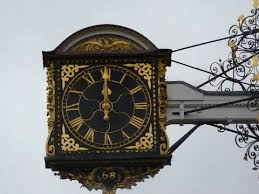
Clock in Guildford High Street,
public measuring of time
This is significant when it comes to our religious experience. Greek, the written language of the New Testament and of the formative thought of Christianity, has two distinct words for our one English word for ‘time’.

The first word chronos is where we get the word, ‘chronology’. Chronos is ordered measured time: it is the ticktock of the clock. We tend to measure and evaluate our lives in chronological language: a long life, a short career, over in a second.

The other word is kairos. This word is less measurable but no less intense. Kairos is the moment fulfilled. It associates perhaps more with quality of life than its bald measurement. Kairos describes a life well lived; a piece of music resonant with beauty despite its length; it is the fullness that a smile can bring or act of kindness. Chronology is irrelevant to kairos like this. You see it in the Psalms, ‘A thousand years in thy sight are but as a moment, a watch that passes in the night’ (Psalm 90.4). As Roger Federer said on winning another grand slam event, ‘age is only a number’.

To unpack time in these two Greek words is helpful as we consider the wonder and mystery that our scriptures unfold before us today. All this is focused in the incarnation of the Word of God, where the Eternal Word becomes flesh and lives as one of us. It is where the chronos of time meets the fulfilment time of kairos.

In our gospel reading the chronos of world history is graced with the kairos of the life of Jesus Christ. His birth in history, born of the Virgin Mary, is on one hand deeply irrelevant to who he is, the very presence, wisdom and eternal Word of God; and yet without entering into human experience lived out through chronological time his incarnation would not touch us at all; he might as well be a phantom and not the Word Made Flesh.

So in the Incarnation, the taking flesh, of the Word of God, Christianity deals with a huge paradox: our human existence is caught up in things eternal, and the things eternal are intimately entwined in the daily existence of being human.

The eternal Word has entered human time; has entered the rhythm of the days – and there was morning and there was evening – has entered the rhythm of the human heartbeat; has entered the rhythm of the music of our lives.

This is what ‘Ordinary Time’, this season of the Church Year holds before us. We have celebrated the great mysteries of the Incarnation - in the Christmas, Epiphany, Candlemas cycle - and now the liturgical year pivots towards the mysteries of Christ’s temptation, passion, death, resurrection and ascension, in Lent, Holy Week and Easter all sealed with the outpouring of the Holy Spirit at Pentecost.

The liturgical year appears to deal in chronos but in fact deals in kairos time and unfolds the mysteries of Christ: as ‘Ordinary Time’ ticks by kairos moments abound.

Finding kairos in the chronos of daily life is what Christian living, life in the Holy Trinity, is all about. This is profound stuff.

This takes us to consider wisdom and the book of Proverbs. Proverbs 8, this morning’s first reading, is a seminal passage for Christians as we look to understand the promise of the coming Son of God. It matters little if this passage was written in the 4th century BC, which is probable, or the day before Jesus was born; the point of it is that it testifies to the presence of wisdom as integral to God’s creation.

This is what might be called a diachronic view, which says that the coming of God’s wisdom is sensitive to the rhythms of human history and is not locked in a chronological moment. In other words, God’s wisdom runs like a thread through human existence and is to be sought now, as much as it was 2,500 years ago.

The book of Proverbs sets our task for Ordinary Time: delight in the Lord is the beginning of wisdom! This is about navigating the pitfalls, traps and snares of the world wisely and in the way and Spirit of Jesus Christ.

Wisdom is not equal to God, wisdom is not god, wisdom was ‘created [by God] at the beginning of his work’ (Proverbs 8.22). Wisdom opens up to us the delights of God and God’s delight in us. Proverbs tells us that wisdom is woven into everything that God made. As we understand the Holy Spirit blowing where it will (John 3.8), the Spirit blows this wisdom through the fabric of the world and our lives to inspire, lead and direct us wisely.

St Paul says in his first letter to the Corinthians, Jesus Christ is ‘the wisdom of God’. His is the wisdom that leads, guides and encourages us. But this is sometimes misunderstood. The Arian heresy of the 4th century asserted that Jesus Christ was a creature, created like you and me, created like wisdom. This makes him less than God, subordinate to the Creator: wise and kind, a really, really good bloke, really obedient to God’s will, but not God our Saviour. Our creed counters this quite plainly ‘he was begotten, not made’: not created.

And this matters ‘for us and our salvation’. We place our hopes in ‘the Word Made Flesh’, ‘the firstborn of all creation’ (Colossians 1.15) because, to quote our second reading, ‘in him all the fullness of God was pleased to dwell, and through him God was pleased to reconcile to himself all things, whether on earth or in heaven, by making peace though the blood of his cross’ (Col. 1.20).

Christ: chronos and kairos; born in time as one of us; yet eternal through the ages of ages. What wonder, what mystery, and to every who receives him, who believe in his name, he gives power to become children of God: therein lies our dignity, our hope and our salvation, that send us out so all may see and know his grace and truth.

+ In the name of the Father, and of the Son, and of the Holy Spirit. Amen.


Sunday, 4 February 2018

Candlemas: light & darkness; flames & ash

First preached as a sermon at Guildford Cathedral, 2nd February 2018

+ In the name of the Father, and of the Son, and of the Holy Spirit. Amen.


The Presentation of Christ in the Temple is perhaps one of the most beautiful, intriguing and mystical of the festivals of the Church.

It is also bittersweet.

It is - all at the same time - a time of rejoicing and recognition, of the fulfilment of longed for hopes and warnings of pain ahead.

What a claim it is that the simple candle can catch the beauty and mystical depths of the Presentation of Christ, reflected in the name Candlemas.

The candle gives light. Light shining in the darkness connects us to the opening of St John’s gospel and the promise of the triumph of light which the darkness cannot overcome. (John 1.5)

How will Jesus Christ the light of the world guide us through the darkness? Candlemas doesn’t give glib answers. As Mary is told, ‘a sword shall pierce your own soul too, Mary’. (Luke 2.35) A candle gives light and warmth, but it can burn us too. Christ, our light, will go through dark times and will be with us in ours.

An extinguished candle leaves an ashen wick: it speaks of mortality. The life and light with which we shine out in the power of the Spirit of Jesus Christ will one day end in dust and ashes.

So too, Candlemas pivots us from the light of Incarnation towards the ash of the beginning of Lent.

Yet, we live hope-filled lives, knowing that the promise of the Resurrection of the Body is the promise of a transformed life in the life of the world to come and eternal life means we shine with Christ’s light in the here and now.

Many lives lack light.

Many people wait attentively and patiently, some knowing what they seek, and others not knowing at all. Yet, instinctively, when they see they recognise.

We celebrated the Conversion of Paul just last week: he was searching for those who bore the Name of Jesus; to kill them not join them. The light of Christ shone, it blinded him, it disorientated him, and he saw the light for what it was: the light that shines in the darkness, the true light that enlightens everyone. (John 1.9)

This light shines out in the life, death, resurrection and ascension of Jesus Christ and it challenges and transforms lives.

This light shone out from the cradle trough of Bethlehem;
in his presentation in the temple;
in his baptism in the Jordan;
in water made wine at the wedding feast;
in his healings on the streets of the towns of Galilee;
his feeding of the crowds on the mountainside.
It shone out even at his darkest hour – when Mary’s heart was pierced with a sword –
an Hour that John calls the Hour of his glorification.
This light shone in his resurrection and ascension, and as the Spirit was poured out upon the disciples in the Upper Room.

This light is creation’s light, the uncreated light of God: ‘let there be light’ (Genesis 1.3). As Simeon declares: he is ‘To be a light to lighten the Gentiles, and to be the glory of thy people Israel’. (Luke 2.32)

 For Simeon and Anna representing God’s first called people, the Jews, that recognition comes in the Temple, not just in the synagogue or on the streets of Galilee. He comes in the prophetic tradition of Malachi, one to cleanse and give light to the temple.

It is not the last time Jesus will visit the temple. Across the Gospels the temple is somewhere Jesus returns to. Indeed immediately following Luke’s account of the Presentation Jesus is back as an adolescent and is found in the temple with the teachers of the Law.

Luke’s Gospel ends in the temple, because after the Ascension of the Lord we read that the discples ‘returned to Jerusalem with great joy; and they were continually in the temple blessing God’. And as the Acts of the Apostles tells us, they continued to pray in the Temple: ‘day by day, as they spent much time in the temple, they broke bread at home and ate their food with glad and generous hearts praising God and having the goodwill of all the people’ (Acts 2.46, 47)

The temple was where the light of God had emanated in Israel, and this light was now to shine through Jesus Christ. This makes sense of Paul’s assertion that the human body is the temple and dwelling place of the Spirit, for Jesus cleansed the earthly temple as his own body was a temple to be raised in three days too.

Christ opens the way for the Gentiles, the second called people of God, to know the way to the Father in Jesus Christ

Candlemas today brings us to present ourselves in this temple; this place of encounter – to receive into our bodies his body and to ponder with Mary and Joseph, Simeon and Anna, and one another the light and darkness, the life and ash of our lives.

And after the communion we will get up, bodily, and move in procession to the Lady Chapel. There we will stand, informally, as the choir sings Simeon’s words.

Christ comes as the Dayspring from on high, the light to dispel the darkness and to enable us to reimagine who we are as men, women and children created in God’s image and likeness.

We stand as those who have received his light, in baptism and Eucharist, and now shine it out and we pledge ourselves to ‘shine as lights in the world to the glory of God the Father’ (Baptism liturgy).

We stand with his Mother, Mary, and ponder all these things in our hearts.

+ In the name of the Father, and of the Son, and of the Holy Spirit. Amen.


Monday, 2 October 2017

'With the help of God, I will': Words & actions

‘Let the same mind be in you that was in Christ Jesus’.

In nomine Patris…

‘Andrew, will you do this for me?’

‘Yes, of course I will.’

You hear the words coming out. Perhaps you really do mean to do what you say you will, and then find that, somehow, it just never happens. Perhaps something deep down tells you that you never intended to do it in the first place, but your words get ahead of your actions.

It’s not that you didn’t want to do it, it’s not even that you consciously decided not to, it just didn’t happen: a sin of omission not commission.

Jesus’ parable of the two sons cuts to the quick of human motivation and action. I wonder if this parable inspired the words of a Book of Common Prayer Confession: ‘we have left undone those things we ought to have done, and done those things we ought not to have done’.

The parable should prompt us to examine our motives and actions.

Of course the parable also points to the possibility that we might equally refuse to do something but then do it. It may be a little perverse, but at least it’s done. This is a time when we ‘may turn from our wickedness and live’.

The irony of the parable is that the unwilling son is found to be willing and the willing is found to be unwilling.

Parables open up possibilities of interpretation. The two sons could represent two aspects of our personality; the bit of us that is willing and the bit of us that is grudging; the bit of us that acts and the bit of us that fails to act.

The two sons could be the Church at times, talking a good Gospel of love, faithfulness and holiness then reining back on that; or at other times, not trumpeting significant acts of mercy and love that we know do happen.

In the context of Matthew’s gospel the target of the parable is thinly veiled. The two sons represent the ‘righteous’ in the guise of the religious authorities – the chief priests and elders - and the ‘sinners’ in the guise of tax collectors and sex-workers: the righteous who say ‘yes we’ll do that’, and don’t; and the sinners who actually do it despite their words.

The two sons were asked to go to work in the vineyard. Herein lies a clue of Jesus’ intent to that first audience. The vineyard is code for Israel. Go and work amongst the people of Israel: recall them to the Covenant; recall them to works of justice, mercy and truth, their first love.

Reflection on the two sons cajoles us into asking ourselves a question: what is my response to God’s call on my life?

Another way Jesus approaches this question is to ask ‘can you drink the cup that I am about to drink?’ Am I willing to shape my life according to the way of Jesus Christ, the one who walked the way of the cross?

The parable asks us to examine our hearts as followers of the way of Jesus Christ. It asks us to reflect on our deepest desires as children of a loving heavenly Father. This is what St Paul is getting at when he shares with the Christians of Philippi his own search, ‘Let the same mind be in you that was in Christ Jesus’.

The use of the word ‘mind’ implies that this is all in our heads; that it is something we decide through rational processes. But we are so much more than being thinking animals. We are desiring, yearning animals: we desire and yearn for love, protection, intimacy, forgiveness. That is not a mind thing; that is about tapping in to our deepest desires.

Our translation of the Bible lets us down when it says that the son who said ‘I will not go into the vineyard ’changed his mind (verse 29). It’s much deeper than that. A more literal translation is ‘change what one has at heart’. He came to realise what he truly had at heart, which is to do his father’s will, despite his initial words.

A change of heart is so much deeper than a change of mind.

Icon of the Parable of the Prodigal Son
There are uncanny echoes in this parable with another parable involving two sons. In the parable of the Prodigal Son, told in St Luke’s gospel, one son goes off the rails and the other stays dutifully attentive. And there’s a twist.

It is the son who rejected his father who learns true repentance and knows abundant forgiveness by overcoming what he thought he wanted to do through a deep change of heart – conversion of life – and what prompted it was ‘when he came to himself’ (Luke 15.17).

Body and mind and heart came together and he returned to his family home to pursue his deepest desire for love, protection, intimacy, forgiveness.

The dutiful son – the one who stayed around - revealed that his heart had not yet caught up with the joy of the love, protection, intimacy, forgiveness that he had already had.

In St Luke’s gospel Jesus beautifully tells us that ‘it is out of the abundance of the heart the mouth speaks’ (Luke 6.45).

Out of the abundance of the heart Jesus speaks: he speaks out of his love for the Father and the Father’s love for him. His speaking, his acting, his mind is all prompted by where his heart is: which is deep in the heart of God. As he reminds us elsewhere, our treasure and our heart are co-located: what we treasure most is deep in our hearts.

This parable of the two sons speaks to our personal discipleship – our ‘yes’ to God – it searches it out and examines it. It also speaks to our commission to go out into vineyard, whose boundaries stretch beyond God’s first-chosen people to the ends of the earth.

This is the Spirit’s gift that our thinking, speaking and acting is shaped by Jesus Christ coming from the very core of our being: our guts; our hearts. That is the Spirit in which we proclaim the Creed, pray the Lord’s Prayer and respond to the dismissal, ‘In the name of Christ. Amen.’ It’s from our guts.

To know the mind of Christ is to be filled with love for the Father, a love poured out in service of the world.

Today let us commit ourselves to take into this new week, both in our words and in our heart, a renewed commitment to Christ: by saying ‘with the help of God, I will’:

Those who are baptized are called to worship and serve God.

Will you continue in the apostles’ teaching and fellowship,
in the breaking of bread, and in the prayers?
With the help of God, I will.

Will you persevere in resisting evil,
and, whenever you fall into sin, repent and return to the Lord?
With the help of God, I will.

Will you proclaim by word and example
the good news of God in Christ?
With the help of God, I will.

Will you seek and serve Christ in all people,
loving your neighbour as yourself?
With the help of God, I will.

Will you acknowledge Christ’s authority over human society,
by prayer for the world and its leaders,
by defending the weak, and by seeking peace and justice?
With the help of God, I will.

May Christ dwell in your hearts through faith,
that you may be rooted and grounded in love
and bring forth the fruit of the Spirit.

Amen.